
Open Source
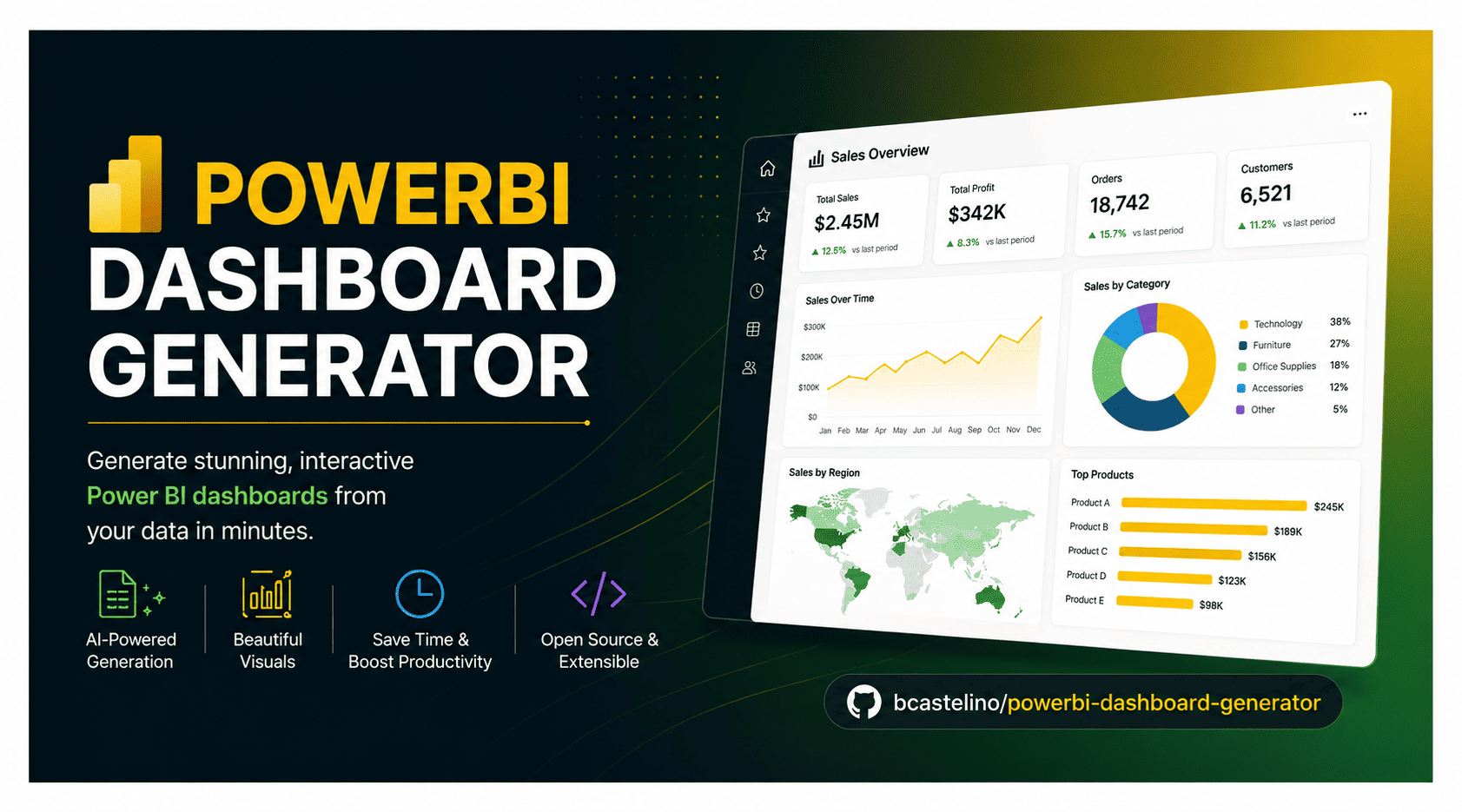
Power BI Dashboard Generator
Nine composable Agent Skills that turn a plain-English request into a valid, branded Power BI Desktop Project: semantic model, visuals and theme included.
PythonAgent SkillsTMDLPBIP / PBIRDAXClaude Code
End-to-end forecasting on Databricks, from ingestion to a registered, promotable model.
External contributor
A Databricks Labs project that turns Unity Catalog tables into a materialised knowledge graph, with ontology design and reasoning exposed as MCP tools.
Four pull requests to a Databricks Labs repository I do not maintain. Working in someone else's production codebase, with their review standards, their CI and their release process, is the closest thing to a public integration test for how you actually engineer.
PR status last verified 31 July 2026
Open: labelled 'status: in progress', accepted into milestone v0.7.0
A broad question in Graph Chat could freeze the entire app until redeploy: a slow graph read ran directly on the single uvicorn event loop, starving every other request, and was unbounded in both time and result size. This bounds every read server-side, moves the blocking work off the event loop, auto-sizes the worker pool to the instance, and degrades a slow query to a clean per-request cancellation instead of a global stall.
Read how I debugged itOpen: awaiting review
Registry configuration resolved in the wrong precedence order, so a stale per-session value could shadow the configured environment and send binary archives and Delta views to the wrong Unity Catalog Volume. A single-file precedence fix with regression coverage.
Closed unmerged: taken over by a maintainer
Knowledge-graph sync aborted whenever a mapped literal exceeded Postgres' 2704-byte B-tree limit. Proposed re-keying the companion tables on a generated SHA-256 column and making the object-bearing indexes size-guarded partial indexes, with a best-effort migration for existing tables.
Closed unmerged: fix had already landed upstream
I hit a 403 filtering a locked graph version and traced it to an over-broad prefix match in the permission middleware. The fix was already in upstream, so I offered a middleware dispatch test to stop the regression returning rather than a duplicate source change.
Nine composable Agent Skills that turn a plain-English request into a valid, branded Power BI Desktop Project: semantic model, visuals and theme included.
Ask questions about US public-company filings and get answers with citations back to sec.gov. Pulls live XBRL facts and filing sections, with no backend and no database.
End-to-end medallion pipeline on Databricks taking raw market data through Bronze, Silver and Gold into a dashboard-ready analytics layer.
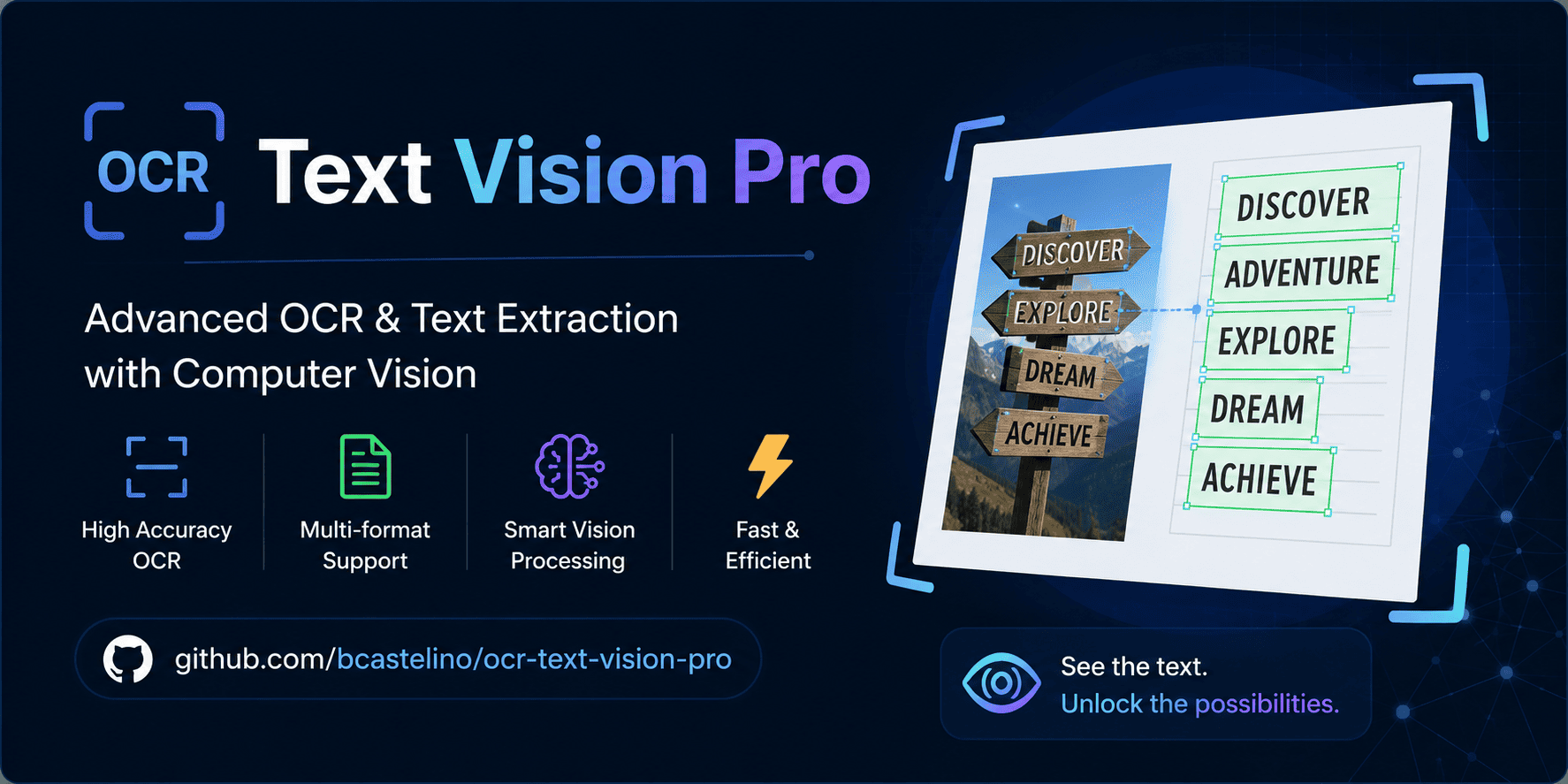
Vision-model document extraction that runs entirely in the browser: upload an image or PDF, get structured text back, then interrogate it in chat.
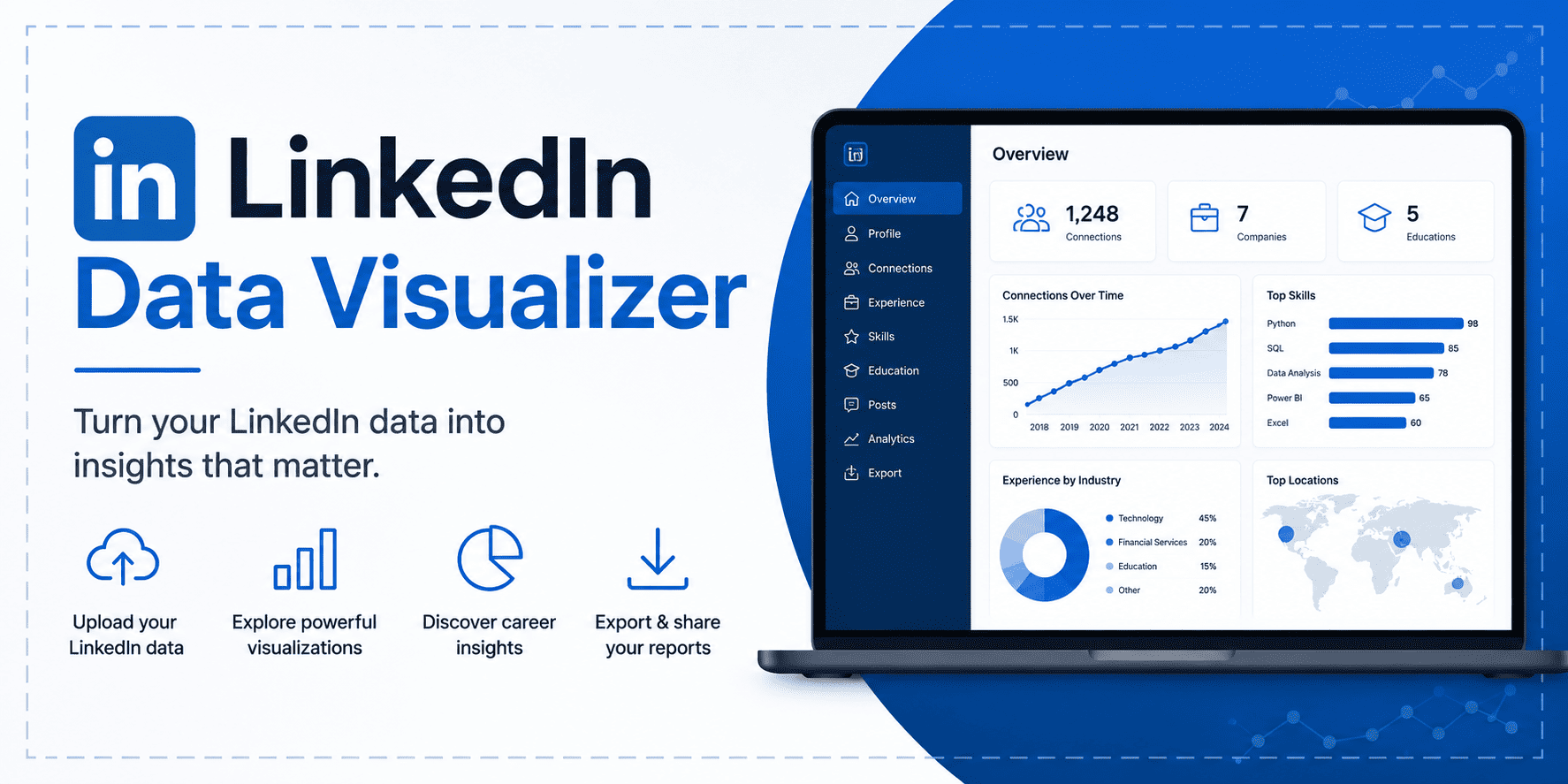
Drop in your LinkedIn export ZIP and get an interactive dashboard of your network and activity. Parsing happens client-side, so the data never leaves your machine.
Explaining a system is the fastest way to find out whether you actually understand it. I write at The Brian Journal about data engineering, AI and the things that surprised me.
A technical deep dive into Genie One, Unity AI Gateway, Lakeflow, LTAP, Lakebase and Lakewatch, and what each announcement actually changes for data and AI engineers.
ReadPrinciples teaches what to build; Patterns teaches how to keep it alive in production. A grounded look at where each one earns its place and where it doesn't.
ReadWhy Imran Ahmad's book is really a pattern library for production agent engineering rather than a catalogue of thirty demos, and who should actually read it.
ReadI build the unglamorous parts of machine learning: the ingestion that does not silently drop rows, the model registry that makes a rollback a one-line change, the inference layer that stays up when six different consumers hit it at once.
I started in AdTech at Media.Net, where I spent four years as a Product Analyst and then Senior Product Analyst turning ad-serving data into decisions people actually made. That taught me the thing no course does: a pipeline is only as good as the question it answers. I moved to the US for an MS in Data Analytics Engineering at George Mason, taught optimisation modelling as a graduate TA, and now work as an AI Data Engineer at WorldLink US on forecasting and LLM systems running on Databricks.
Lately most of my time goes to the seam between LLMs and analytics: getting a natural-language question to become a governed SQL query, then a semantic model, then a dashboard someone trusts. I also contribute to Databricks Labs' OntoBricks, where debugging an event-loop stall in someone else's production codebase taught me more than any tutorial has.
I write about all of it at The Brian Journal, mostly because explaining a system is the fastest way to find out whether I actually understand it.
Daily, in production, since 2025
Production forecasting platform, 3 registered model versions
Shipped agent skill toolkits and retrieval apps in the open
Five years building ingestion and transformation pipelines
Automated the SQL-to-visual path end to end
How the work actually ships
Concentration: Data Modeling/Warehousing and Database Administration
George Mason University, College of Engineering and Computing
Verify this degreeA 30-credit multidisciplinary programme combining statistics, computer science and operations research, aimed at the engineering side of analytics rather than reporting.
University of Mumbai, Don Bosco Institute of Technology
Four-year engineering programme covering the fundamentals I still use daily: databases, operating systems, networks and software engineering.





Have a question, a role, or a system you want a second opinion on? The fastest way to reach me is email; I reply to everything that isn’t automated.
Open to AI/ML Data Engineer, Analytics Engineering and Data Platform roles. Based in Dallas, TX; open to relocation and remote.